

Aggression in dogs is a topic that causes anxiety in many owners. The idea that a loving pet can exhibit dangerous behavior is difficult to accept. However, the reality is that aggression is not necessarily violence, but a natural reaction to intense emotion.
In the canine world, aggression has a clear role: to communicate. It can occur in situations of pain, fear, insecurity or confusion. Often it is not an offensive action, but a form of self-defense. A dog who is tense, scared or uncomfortable will instinctively react to regain control and safety.
The problem is not the reaction itself, but when subtle signals are overlooked. Aggression always has a preliminary phase: the body stiffens, the gaze changes, the tone of vocalizations changes. They are small but essential details that predict emotional distress.
When these signals go unnoticed, the behavior escalates. Not because the animal wants to attack, but because it can no longer handle the tension. Understanding these messages is the key to a balanced dog-human relationship.
Here are 5 signs that your pet is aggressive
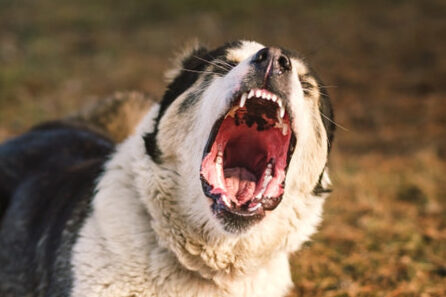
1. He is tense, rigid
The first warning sign is usually silence. A calm dog moves relaxed, with a relaxed body and a free tail. But when the body suddenly becomes tense, the shoulders freeze and every muscle seems tense, it means that the animal feels strong internal tension. That stiffness often occurs moments before a visible reaction. That’s when instinct takes over and the dog goes into a state of alert. His body transforms into a protective tool, ready to react at the slightest sign of threat.
For many owners, this posture goes unnoticed, but it says a lot. The dog is no longer relaxed, but concentrated, attentive, prepared for a possible confrontation. In those moments, a sudden approach, persistent eye contact or an attempt to touch him can increase the tension.
The most appropriate gesture is to move away gently, without sudden movements and without forcing him to interact. Give him space and time to calm down.
2. Barks menacingly
Barking is a dog’s natural way of communicating. But there is a clear difference between barking for joy and barking for warning. When the dog barks briefly, forcefully, with its body tense and its tail raised, it sends an alarm. This type of barking is often accompanied by other signs such as raised fur, bared teeth, defensive posture. It is important not to react with shouts or threats, as this will only confirm his fear or tension.
Better to stay calm and create distance. If you notice that the barking occurs in recurring situations, such as when someone knocks on the door or when another dog passes by, you can resort to desensitization exercises, possibly with the help of a trainer.
3. Avoid eye contact
Contrary to appearances, a dog that looks away is not necessarily calm. Sometimes avoiding eye contact is a sign of fear or discomfort. In the canine world, direct gaze is a form of challenge. Therefore, a scared or tense dog may avoid looking you in the eyes to avoid conflict. But if you approach him forcefully, talk to him under pressure, or touch him when he doesn’t want to, it’s possible that this avoidance will suddenly turn into a defensive reaction.
Respect the distance he asks for. Let me look at you first. Dogs need to feel that they can choose the moment of contact, otherwise they feel pressured and pressure, in their world, means danger.
4. Show your teeth
Here the signal is already evident. A dog showing its teeth isn’t doing it for show, it’s doing it as a warning. At that point there is no more confusion: he feels threatened and warns you that he is ready to defend himself.
The mistake many people make is that they start raising their voice or trying to get closer. In fact, this amplifies the threat. The best reaction is to remain calm, not move suddenly, and slowly back away with sideways movements without making eye contact.
If this reaction occurs frequently, especially in predictable situations (when you approach his food bowl, a toy, or his resting area), talk to a dog trainer. Possessive aggression can be corrected through exercise and control of resources, not punishment.
5. Growls constantly
Growling is one of the clearest signs of a dog’s discomfort. Unfortunately, it’s also one of the most misunderstood. Many teachers see it as a form of disobedience or provocation and react by arguing or punishing. In reality, growling is not a form of challenge, but a communication mechanism.
This deep, controlled sound occurs when the animal tries to avoid direct conflict. It’s his way of saying he needs distance, space or time to calm down. The growl is actually a warning phase, a signal that stress has reached a high level, but that the animal is still trying to handle the situation without reacting physically.
The problem arises when this signal is ignored or punished. Over time, the dog learns that growling doesn’t work, so he drops the warning and goes straight to aggressive behavior.
Therefore the appropriate response is not punishment, but observation and management of the context. Identify what triggered the tension and give the animal space to calm down. Reward calm, not silence. Create safe moments, avoid pressure, and don’t force interactions when you see signs of discomfort.
When to worry
Any display of aggression deserves to be taken seriously, no matter how small it may seem at first. It never occurs for no reason, so identifying the cause is essential.
Sometimes aggressive behaviors are the result of a physical condition. Pain, joint inflammation, infections or even neurological disorders can alter the dog’s reactions. In other situations, the cause may be an infectious disease, such as rabies, or a problem affecting the nervous system. For this reason, the first step when you notice signs of aggression is a visit to the vet, who can rule out medical causes.
If there are no physical problems, a consultation with a canine behavior specialist who can evaluate emotional or behavioral causes such as anxiety, stress, frustration, trauma or lack of socialization is indicated. The sooner you intervene, the greater the chance of correction.
onlusion
Aggression in dogs is often misunderstood and can create significant concern for pet owners. Many people assume that aggressive behavior automatically means a dog is dangerous or inherently violent. In reality, aggression is often a natural response to certain emotional states such as fear, stress, frustration, or the need to protect territory or loved ones. Understanding this distinction is essential for addressing the issue in a responsible and compassionate way.
Dogs communicate primarily through body language and behavior. When they feel threatened, overwhelmed, or uncomfortable, aggression may become a way for them to express those emotions. Growling, barking, showing teeth, or snapping are often warning signals rather than immediate attacks. These signals are part of a dog’s communication system, intended to create distance from whatever is causing distress. Recognizing these early signs allows owners to intervene before the situation escalates.
One of the most important steps in managing aggression is identifying its root cause. Some dogs may react aggressively due to fear or past trauma, while others may display protective instincts over food, toys, territory, or their owners. Lack of proper socialization, insufficient training, or negative experiences during early development can also contribute to aggressive reactions later in life. By understanding what triggers the behavior, owners can begin to address the problem in a constructive way.
Training and positive reinforcement play a key role in helping dogs manage their emotions and reactions. Consistent guidance, patience, and reward-based training can teach dogs alternative ways to respond to stressful situations. Instead of reacting with aggression, they can learn to remain calm, follow commands, or remove themselves from uncomfortable circumstances. Professional trainers or animal behavior specialists can also provide valuable support when dealing with more complex cases.
It is equally important for owners to create a stable and secure environment for their pets. Regular exercise, mental stimulation, and clear boundaries help dogs feel more balanced and confident. When a dog’s physical and emotional needs are met, the likelihood of aggressive responses often decreases significantly.
Ultimately, aggression in dogs should not be seen as a permanent trait but as a signal that something needs attention. With understanding, proper training, and responsible care, many dogs can learn to overcome aggressive tendencies and develop healthier ways to interact with their surroundings. By approaching the issue with patience and knowledge, owners can strengthen the bond with their pets and ensure a safer, more harmonious relationship for everyone involved.
latest posts published

Diabetes in dogs and cats

Car travel with pets: prepare for the journey

7 questions to consider when you want to get a dog
How to protect your pet on hot summer days

Domestic dangers for dogs | Here are the most common household risks for dogs
The best Julius K9 harnesses and leashes for fun summer days

Common diseases of cats. Causes and symptoms

How to take care of your four-legged friend during the holidays
How to help your dog deal with the fear of driving?
