

Go on a trip and bring your furry friend with you. Going to different places and meeting new people is an extremely fun way to spend time and strengthen bonds – this also applies to our beloved pets.
Many pet owners they like to take their pets on car trips as a way to have more adventures together.
Others may not feel comfortable leaving their cat or dog at the boarding house while they are away. Whatever the reason, there are some tips to keep in mind to ensure a safe and fun trip together.
PREPARE YOUR CAR
Of course, we care about our pets more than our suitcase or cooler. From a legal perspective, however, luggage and our four-legged friend are no different when it comes to a car trip.
Road traffic laws in most countries consider animals transported in cars to be “luggage”. The penalties imposed are applied if the baggage, which in this case is live, is not adequately insured.
In general this means that it must be secured in such a way that it does not slip, fall or roll forwards or backwards, even in the event of an emergency stop or sudden, unexpected manoeuvre.
So placing the kitten or dog in the back seat, even if it is tied down in some way, is usually not enough. Transport boxes created specifically for pets are the most suitable.
Properly insuring your pet will also ensure that it is not injured in the event of a sudden stop or accident. Additionally, it will prevent your cat or dog from unexpectedly walking into your arms while driving, which can be dangerous for you, the driver.
Properly protecting your pet will also ensure that it does not get injured
in the event of sudden braking or an accident. It will also prevent the cat from walking unexpectedly or to
the dog in your arms while driving, which can be dangerous for you,
the driver.
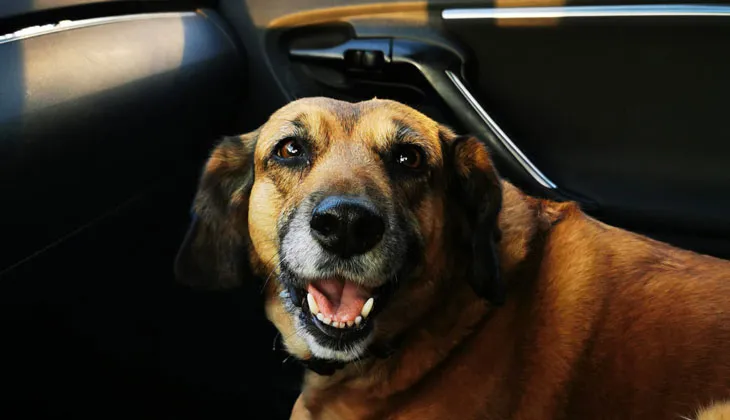
PREPARE YOUR PET
In the animal world there are real walkers, but there are also lazier ones who prefer to stay at home. Especially before long trips, think about whether you are doing your pet a favor by bringing him along.
If you have a pet that becomes very stressed by unfamiliar smells and noises, in an unusual environment and in case of limited freedom of movement, it might be a good idea to opt for a sitter or leave it in a kennel.
Many of our four-legged friends may suffer from nausea or motion sickness while traveling. You may want to consider gradually accustoming your pet to walking longer distances.
If you notice that your cat or dog seems unwell or is suffering from motion sickness, talk to your veterinarian about possible medications that may help your pet feel comfortable on a longer trip.
It is also helpful to feed your pet 12 hours before departure. For shorter trips, your pet should be fine with the next meal at the destination. For longer trips you can give him small portions during meal breaks. Water must always be available.
TIME PLANNING
There are some precautions you can take before traveling to make things easier for your pet. For example, try planning longer car trips during the cooler hours of the morning or evening.
Extreme heat and cold can take a toll on your four-legged friend and can even be life-threatening in bad weather. Make sure your pet has enough water to drink.
Remember to never leave your pet in a parked vehicle, especially if it is very hot or very cold outside. On hot days, cars overheat within minutes and can become a death trap for your pet. A slightly open window cannot provide the necessary air circulation inside a hot car.
If your pet overheats, he may appear tired, agitated or shaky. Move the animal to a cool place as soon as possible and give it a drink of fresh, cold water.
Regular stops should provide fresh air, ease of movement and, ideally, a shady spot where your four-legged friend can cool off. If your pet appears unable to breathe, collapses, or is unconscious, this is an emergency! Cover the animal with cold, wet cloths or towels and go to the nearest vet as soon as possible.
If possible, avoid traffic jams. If your car is not equipped with air conditioning, the circulation and air quality will be poor. In general, you should carefully look at the route before setting off. Are there a lot of construction zones on your street? Are there tunnels that can be closed during the journey?
Also, pay attention to elevation differences on the road so you can give your furry friend something to chew to relieve pressure in their ears.
If you are planning a ferry crossing, you should check in advance whether and under what conditions pets are allowed on the ferry. Depending on the duration of the crossing, the animals may have to stay in the car or be housed in cages or special transport boxes.
PREPARE THE EQUIPMENT
Another important thing to remember when planning a road trip with your pet is that they will need a lot of things when they go on vacation! Here are some things you might want to add to the list:
- Food and rewards – Don’t forget, for canned food, get a can opener!
- All medications, vitamins and supplements
- Drinking water – If your pet has a sensitive stomach, it may be helpful to bring drinking water from home.
- Bowls for water and food
- Your dog’s bed and some toys
- Medallion with current identification data – Enter your mobile number or other telephone number where you can be reached while you are away.
- leash – In many places it is necessary for your pet to be kept on a leash no longer than two metres.
- Garbage bags
- Cat litter and litter
- A roll of paper towels for dirty paws and other problems
- An old towel, in case of rain or after a bath
- First aid kit
- Proof of vaccinations
- Medical history – Scan the documents to a USB device and you will have them in case your pet gets sick or injured.
- Photo of your pet – In case it is lost, have a recent photo, so you can make announcements as soon as possible.
Preparing ahead of time can take a little time, but it’s the secret to planning a road trip that’s comfortable for your pet, memorable and fun for everyone. Now the last thing to do is leave and have a nice trip!
Are you looking for a vet?
The veterinarian has a very important role in the animal’s health. Enter your location information and get a list of vets near you.
FIND A VETERINARY DOCTOR
latest posts published

Diabetes in dogs and cats

Car travel with pets: prepare for the journey

7 questions to consider when you want to get a dog

How to protect your pet on hot summer days

Domestic dangers for dogs | Here are the most common household risks for dogs
The best Julius K9 harnesses and leashes for fun summer days

Common diseases of cats. Causes and symptoms

How to take care of your four-legged friend during the holidays
How to help your dog deal with the fear of driving?
