
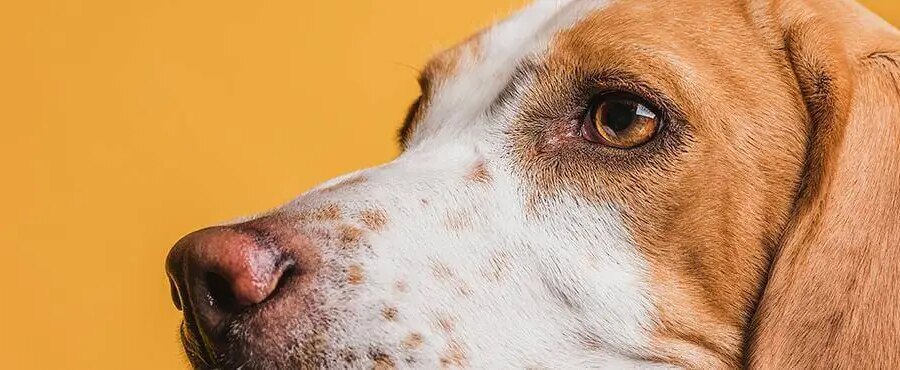
Your dog’s eyes express love, excitement, sadness, anxiety and many other emotions. If your four-legged companion has eye problems, however, he may not be able to communicate as easily and may even lose his sight.
It is important that you can recognize eye problems in dogs in the early stages because rapid intervention can, in many cases, be essential to achieve better results.
The structure of the dog’s eye
To learn how to identify dog eye problems it is helpful to understand the unique structure of your dog’s eyes.
Like most mammals, your dog’s eyes are spherical in shape, with two fluid-filled chambers, front and back. The chambers are separated by lenses, the structure of which helps focus the light beams at the back of the eye, the retina.
Your dog’s eye has a cornea, which is the clear outer surface that provides protection to the inner eye. Your dog’s eyes also have pupils and irises like yours, muscles that help them move and open and close the lenses, allowing the right amount of light to enter.
Your dog also has an upper and lower eyelid, but one of the dog’s unique characteristics is the existence of a third eyelid, called nictitating membrane. The third eyelid is located at the bottom of the inner corner of the eye, between the lower eyelid and the eye.
The third eyelid is believed to provide protection to the eyeball and help remove foreign bodies from the eye. There is also a gland located in the third eyelid that is believed to produce 30% of the aqueous portion of your dog’s tear film.
Normally, the third eyelid is hidden under the lower eyelid, but it can become visible in one or both of your dog’s eyes if there is a problem. For this reason it is a good idea to familiarize yourself with the anatomy of your dog’s eyes, including the position of the third eyelid.
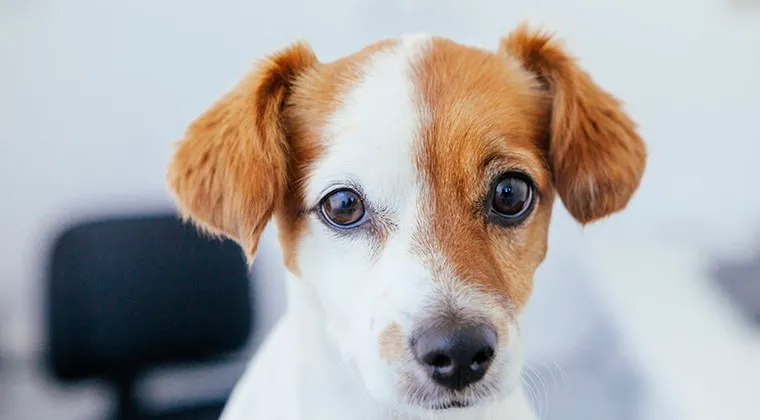
1. What is “cherry eye”?
A specific condition of the third eyelid, “cherry eye,” which gets its name from the red, inflamed mass that appears in the eye when a dog develops this condition. “Cherry eye” occurs when the gland in the third eyelid thickens and slips out of place.
You may occasionally notice your dog’s third eyelid while sleeping or if your pet is recovering from anesthesia.
If your dog has cherry eye, you may notice a red bump appearing on the edge of the third eyelid, which is usually the first sign of this eye condition in dogs. Swelling may occur in one or both eyes. Some dogs may show no other signs, while others may show symptoms similar to those of conjunctivitis.
“Cherry eye” is most commonly found in dogs between the ages of six months and two years.
It cannot be prevented and the cause is unknown, but there may be a genetic predisposition. However, when you know what signs to look out for, you can act quickly and seek veterinary care for your dog.
How is cherry eye treated?
Your vet may recommend treatment with eye drops as a first step in the Cherry Eye approach. If the condition persists, the inflammation does not subside, and the dog does not feel well, surgery may be recommended.
2. Conjunctivitis
Conjunctivitis, or “pink eye,” is an inflammation of the conjunctiva and is quite common in dogs. Signs include redness of the eyes, swelling of the tissue around the cornea, eye discharge, and mild eye discomfort, with signs such as keeping the eyes closed or scratching the eyes.
There are numerous causes that cause conjunctivitis, such as allergies.
To treat conjunctivitis, your vet will first want to find out what the cause is. Depending on the source of the inflammation, treatment may include the following procedures:
- Remove the irritant and soothe the area with pain relievers
- Prescription antibiotics and saline flushes to manage the infection
- Allergy medications
3. EPIPHORA
The condition of excessive tearing is known as “epiphora”. Signs of this eye condition in dogs include wet, watery eyes, which can cause marks or odors on the fur under the eyes.
Epiphora can be the result of many conditions in which there is excessive tear production or poor tear drainage, including abnormal eyelashes, conjunctivitis, and corneal ulcers.
Miniature and small breeds appear to be more prone to epiphora. The most common cause of this condition is poor tear drainage. Sometimes the dog’s eyelids turn inward, which also irritates the eye and hinders the tear drainage system. Surgery may be an option to improve tear drainage or correct the position of the eyelid.
In most cases, your vet will want to find out the cause of the epiphora and treat the problem accordingly.
4. Dry eye
A dog with dry eye or keratoconjunctivitis sicca lacks the lubricating effect of tears, a problem that can lead to blindness if left untreated.
Dry eye often resembles recurrent conjunctivitis or a persistent infection and may include runny eyes, dry nose, and cloudy appearance of the cornea, with or without visible ulcers.
The most common cause of dry eye is when the dog’s immune system attacks the tear glands.
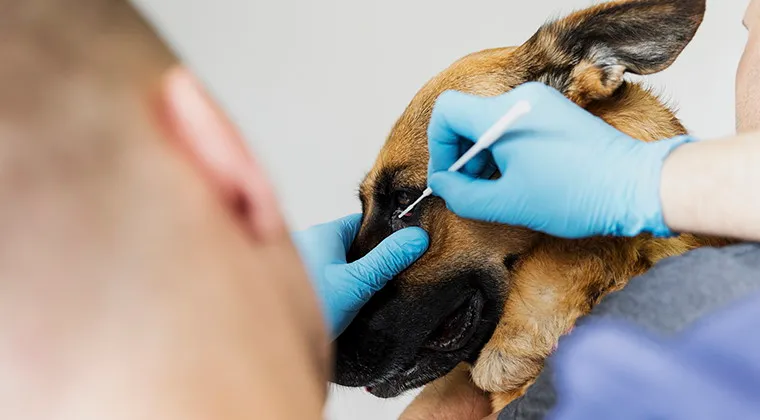
Dry eye is diagnosed using a simple test that measures tear production, which is painless and easy to perform. Dry eye treatment aims to restore tear production by using an ointment applied to the eye twice a day. Some dogs may need supportive treatment with drops and antibiotics or ointments and artificial tears.
5. GLAUCOMA
Glaucoma occurs when an imbalance in the production and drainage of fluid from the eye (aqueous humor) causes a buildup of fluid that increases eye pressure to unhealthy levels. This not only causes pain for your dog, but can be accompanied by red eyes and vision loss.
Signs of glaucoma include dilated pupils (the pupil in one eye may be a different size than the pupil in the other eye), redness of the eyes, or dilated blood vessels in the white part of the eye (sclera).
There may also be noticeable swelling of one or both eyes. Your dog may partially close his eyes or scratch, and you may notice lethargy, loss of appetite, or even listlessness.
These signs may be due to pain caused by glaucoma. If your dog shows signs of glaucoma, he should be seen by a veterinarian immediately to prevent vision loss.
Glaucoma is diagnosed using a tonometer, a special device for measuring intraocular pressure. Your veterinarian will recommend the appropriate medical and/or surgical treatment.
6. CATARACT A
Cataracts occur when the lens becomes cloudy or opaque, effectively preventing light from reaching the retina. This can cause anything from mild vision problems to blindness. Cataracts should not be confused with the small imperfections of the lens found in young dogs or the thickening and hardening of the central lens tissue that normally occurs in older animals.
The most common cause of cataracts is genetic (hereditary).
Hereditary cataracts can affect many dog breeds, but some breeds appear to be more prone than others. Other causes include diabetes, malnutrition, radiation, inflammation and injury. In diabetes, cataracts result from the binding of glucose breakdown products to proteins in the lens. Most diabetic dogs will develop cataracts.
Will my dog go blind?
Cataracts do not mean permanent blindness. In fact, dogs have such a keen sense of hearing and smell that vision loss may not be noticed. Cataracts may not completely block your vision. The development or stagnation of cataracts depends on the type of cataract, the breed of dog and various other risk factors.
Many dogs do well without specific treatment for cataracts. Cataracts can be removed surgically by a veterinary specialist ophthalmologist. You should speak to your veterinarian for further evaluation of your dog’s condition and treatment options.
No one likes to see their pet suffer, so if you notice your dog touching his eyes or rubbing his face on the floor or carpet, know that this is a sign that there may be eye problems.
It’s a good idea to see your vet at the first sign of an eye problem. In some cases, such as in the case of glaucoma, this could save your dog’s sight.
latest posts published

Diabetes in dogs and cats

Car travel with pets: prepare for the journey

7 questions to consider when you want to get a dog
How to protect your pet on hot summer days

Domestic dangers for dogs | Here are the most common household risks for dogs
The best Julius K9 harnesses and leashes for fun summer days
Common diseases of cats. Causes and symptoms

How to take care of your four-legged friend during the holidays
How to help your dog deal with the fear of driving?
