

Did you know that a simple daytime game can turn a summer day into a medical emergency? If you have a four-legged friend in your family, you will surely already know that the summer brings with it a special energy: more time together, more trips, more joy of living. It’s a joy to see him running through the grass, sniffing the warm air or wagging his tail just because you’re out of the house. But beyond all these beautiful moments, summer requires a little more attention. Not because we want to be overprotective, but because our pets don’t always have the right tools to protect themselves, especially when it comes to heat.
One of the most serious problems for our pets is sunstroke. This, unfortunately, does not manifest itself with subtle signs, but comes on quickly and requires immediate intervention.
What is sunstroke?
When a dog’s body temperature exceeds 40°C, his body enters a serious risk zone. It is the moment when we are not just talking about discomfort, but about a health emergency. Heatstroke occurs when a dog’s natural cooling mechanisms fail. And unlike us, they don’t have sweat glands distributed throughout their bodies. They lose heat mainly through jerky breathing and only slightly through their paw pads.
On hot days or in unventilated spaces like a hot car, this heat loss is no longer sufficient. The internal temperature suddenly increases and with it the risks increase: organ damage, coma and even sudden death. And all of this can happen faster than you think.
This is why it is essential to quickly recognize the signs and know how to react.
What are the symptoms of heatstroke in dogs?
Did you know that the first signs of heatstroke can easily be confused with simple summer tiredness? But that’s exactly the problem. Because when your dog’s body starts to overheat, every minute counts and any delay can make the situation worse.
The first signs appear discreetly: rapid breathing, excessive salivation, a strange agitation or, on the contrary, an unusual discomfort. The dog may appear confused, stagger or desperately search for a cool place, clinging to tiles or walls. As heatstroke progresses, things get more complicated: intensely red or bluish gums, rapid pulse, vomiting, diarrhea and, in severe forms, loss of consciousness or seizures.
Well, all these are not just signs that he is too hot. These are clear warning signs that the body can no longer cope. That’s why it’s important to recognize them early and act quickly.
What to do in case of heat stroke
- ⮞ Immediately move it to a cool, shaded place. Indoors, under a tree or in any area protected from the sun. Every minute counts.
- ⮞ Bathe his body with warm, not cold, water. Start from the chest, continue with the abdomen and legs. Avoid pouring water on his head or all over his body to avoid thermal shock.
- ⮞ Use a fan or air conditioner. Moving air accelerates the evaporation of water from the fur and helps to lower the temperature.
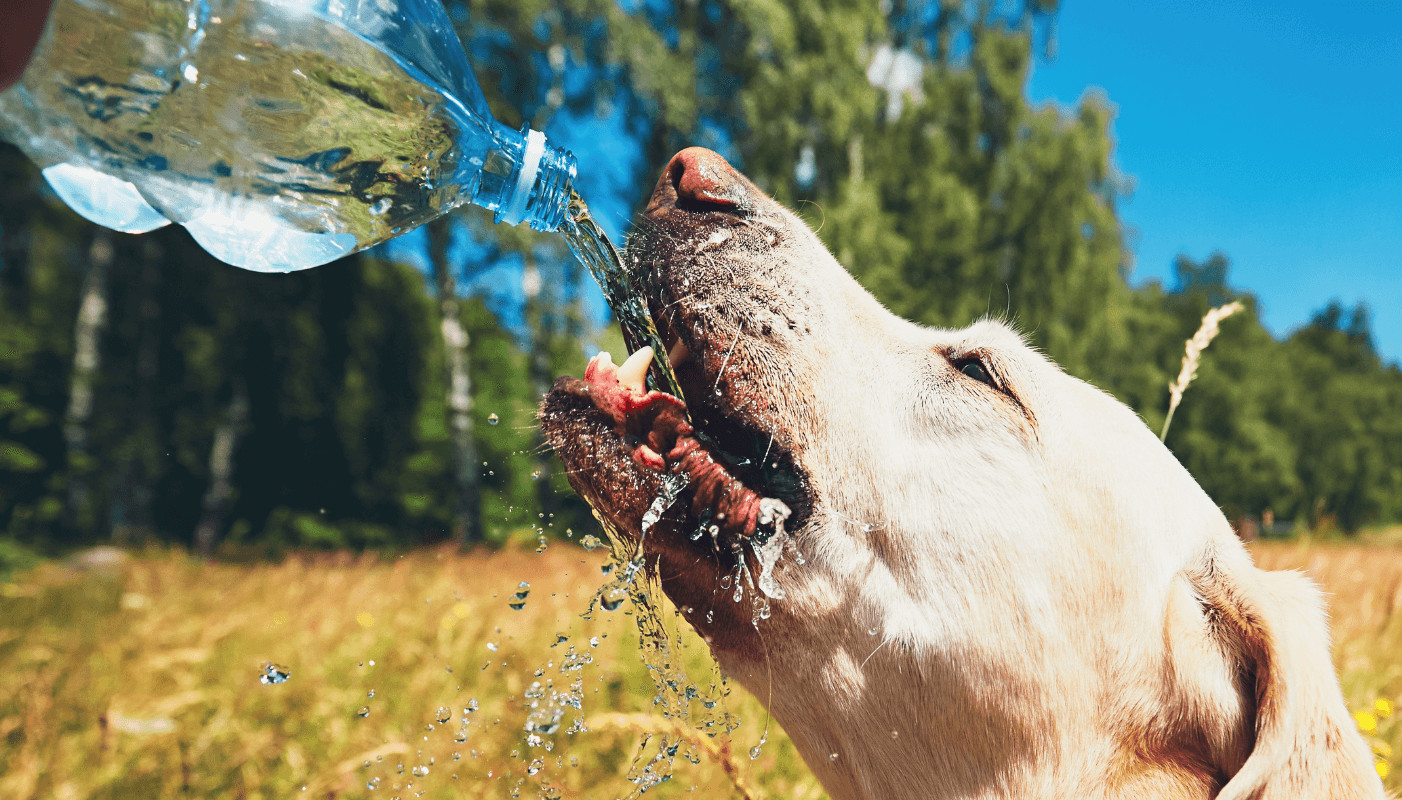
- ⮞ Give water, but in small and frequent quantities. If he drinks too quickly he may vomit and if he refuses water don’t force him. You can lightly moisten your mouth and lips with a damp cloth.
- ⮞ Monitor breathing and state of consciousness. If he becomes listless, unresponsive, or seems confused, the situation is serious.
- ⮞ Do not apply ice directly to the skin. A sudden drop in temperature can worsen the condition and lead to vasoconstriction, preventing heat from dissipating.
- ⮞ Contact your veterinarian immediately. Even if he appears to have recovered, complications can arise later and it is essential to consult a vet.
Obviously, prevention is much simpler than managing a crisis and, in the case of sunstroke, it can make the difference between an unpleasant episode and a tragedy. We know you don’t want to go there. Here is a small guide for hot days, simple to apply but with great effects on the well-being of your four-legged friend:
- ⮞ Establish a walking schedule – go out early in the morning, when the asphalt has just cooled during the night, or in the evening, when the sun no longer has the same intensity. And between 11am and 4pm. the ideal would be to stay at home.
- ⮞ Test the asphalt with the back of your hand – it is simple and effective. If you can’t hold your hand together for more than 5 seconds, it means it’s even harder for him.
- ⮞ Make sure you always have fresh water on hand – not only at home, but also during walks. Place bowls of water in multiple rooms or use recirculating fountains.
- ⮞ Look for shaded, well-ventilated areas – during a picnic, on the terrace or even on the balcony. A simple corner with an umbrella and a cooling mattress can become your favorite mid-day refuge.
- ⮞ Think about useful accessories – a cooling vest, a wet bandana, a cooling collar or a cooling mattress can work wonders. They are comfortable, safe and also pleasant to the touch.
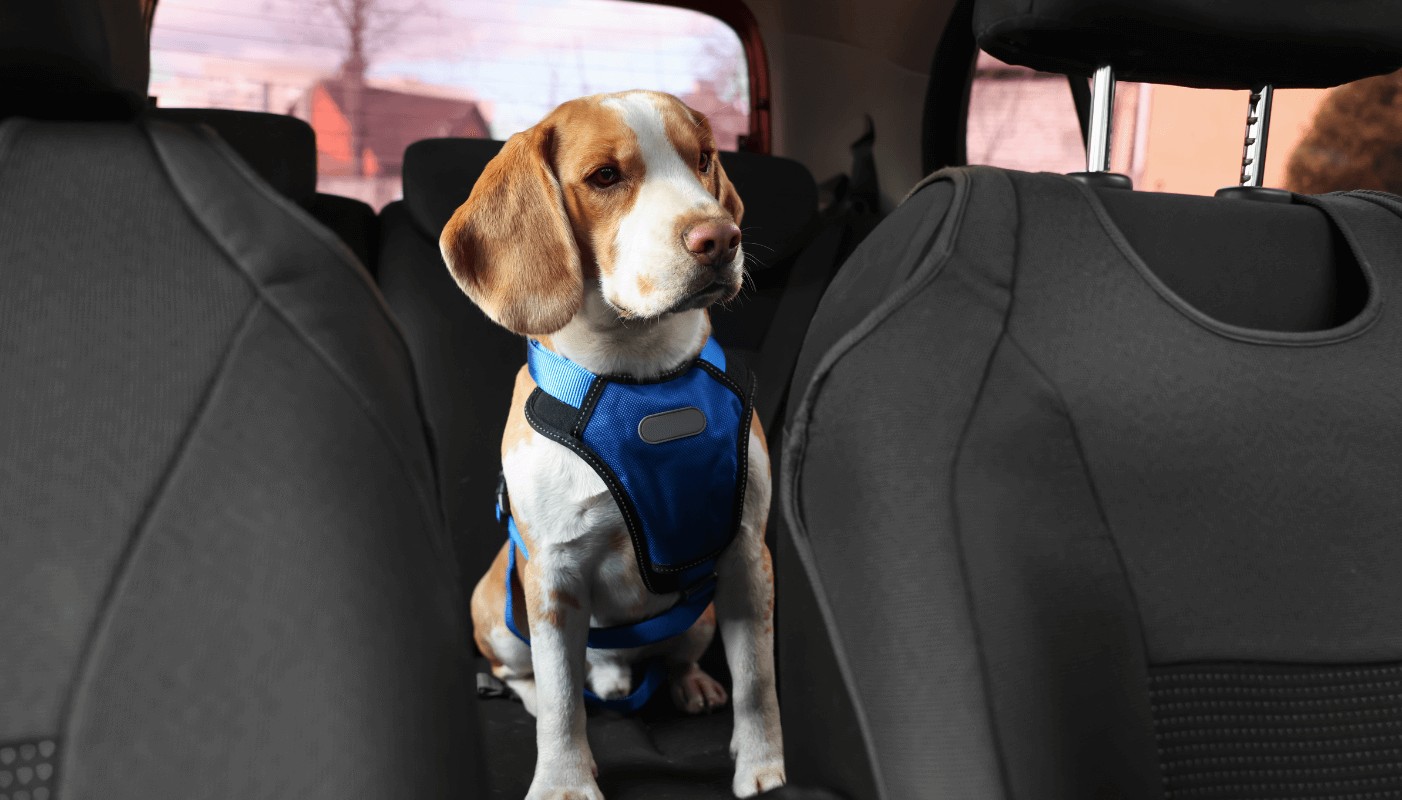
- ⮞ Never leave it in the car, not even for 2 minutes.
- ⮞ Call the vet if you see warning signs such as seizures, fainting, vomiting, rapid breathing or confusion. Better to call “in vain” than to be too late.
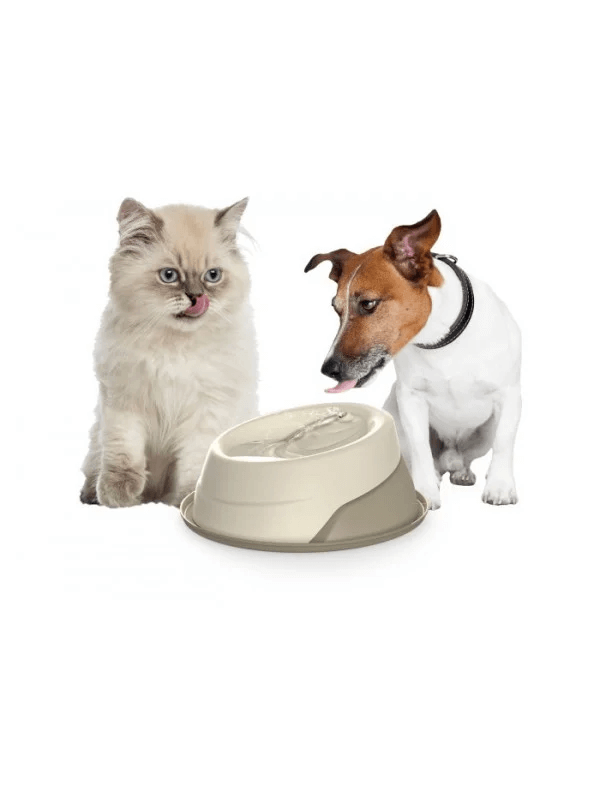



So, if we think about it, protecting quadrupeds from possible sunstroke is not that difficult. A cool place, fresh water, a pat on the belly and limiting sun exposure is all your four-legged friend needs when temperatures rise above normal limits.
Sources:
latest posts published

Diabetes in dogs and cats

Car travel with pets: prepare for the journey

7 questions to consider when you want to get a dog
How to protect your pet on hot summer days

Domestic dangers for dogs | Here are the most common household risks for dogs
The best Julius K9 harnesses and leashes for fun summer days
Common diseases of cats. Causes and symptoms

How to take care of your four-legged friend during the holidays
How to help your dog deal with the fear of driving?
