
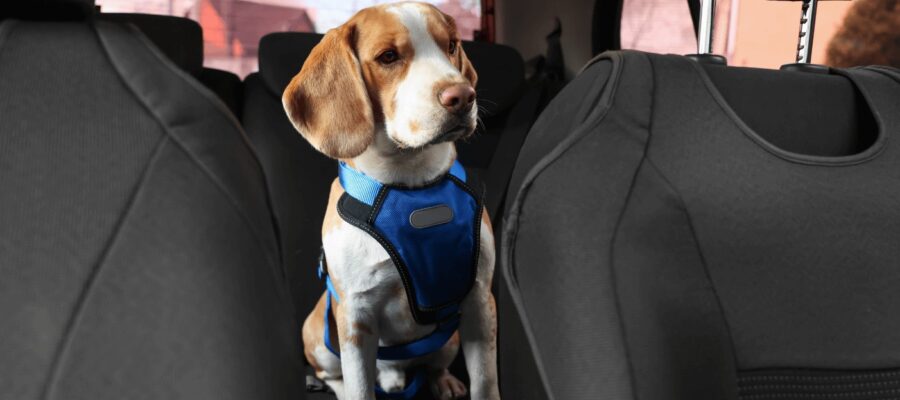
For you, the car is a means of moving quickly from one place to another. And your dog? Have you thought that perhaps your four-legged friend considers the car a noisy “box” that vibrates, moves suddenly, makes noises and more, takes him to unknown places without him understanding the reason? Well, it’s no wonder that some dogs stop at the door, hesitate to get into the car, or get restless on the road because, yes, there are dogs who are afraid of driving.
You may have already noticed the signs: your dog wriggles, drools excessively, or even barks nervously when he sees the car. Or, on the contrary, he cringes in the back seat, with his ears lowered and his gaze fixed on you, hoping that everything will end as soon as possible. Fear of cars can have various causes: from lack of habit to an unpleasant past experience. But the good news is that this discomfort is not permanent.
Why some dogs are afraid of driving
1. Negative experiences in the past
Dogs quickly associate places and situations with the emotions they experience. If a dog associates travel with stressful situations, such as visits to the vet or separation from his owner, he may have developed an aversion to cars. Furthermore, if it was transported during a difficult time, such as a move or a major change of environment, the car can become a symbol of insecurity.
To help him change his perception, it is important to create positive associations, offering him pleasant experiences and moments of relaxation before and after each ride.
2. The habit of driving
If your little four-legged friend is not used to being transported in the car, this may seem like an unfamiliar and, by definition, stressful environment. Engine noises, movement and confined space can overwhelm him, especially if he has not had the opportunity to experience pleasant journeys.
The more a dog avoids the car, the more his anxiety may increase. It is therefore important to gradually familiarize him with this environment, using gentle methods and positive associations, so that he learns that the car is not a place to fear.
3. Motion sickness
Just like humans, some dogs can suffer from motion sickness, which causes them physical discomfort. Symptoms such as excessive drooling, panting, restlessness, or even vomiting are signs that your pet may be suffering from motion sickness.
If you notice reactions of this type, try to gradually get him used to the car, starting with short sessions and frequent breaks. Also, avoid feeding your dog a few hours before your trip to reduce the risk of nausea. In more severe cases, your vet can recommend solutions to help your pet feel more comfortable while traveling.
How to get your dog used to being comfortable when traveling in the car
If your four-legged friend shows signs of fear while driving, it is essential to give him time and gradually get him used to this experience. Forcing him to climb or suddenly exposing him to long journeys will only increase his fear. Instead, a gentle approach based on patience and positive associations will help him feel safe.
It starts with a gradual familiarization
Do not start the engine immediately. Allow him to approach the car, smell it and explore it without pressure. Leave the doors open and give him the freedom to climb on his own at his own pace. Use treats and talk to him in a calm tone to encourage him.



Associate the car with pleasant experiences
To help him see the car as a safe place, offer him treats every time he gets in alone. You can also feed him in the car without starting the engine. So he will understand that it is not a space to be afraid of, but a space where positive things happen.
Make trips short and enjoyable
It starts with trips of a few minutes to destinations that he enjoys such as a walk in the park or a visit to friends. Avoid taking it only to the vet, so that the car is not associated only with unpleasant experiences.
Create a comfortable environment
To help him feel secure, add a familiar blanket, a favorite toy, or a soft bed in the car. Make sure the temperature is right and avoid loud noises that could scare him. A quiet and familiar space will help him relax and perceive the car as a safe place.




5 useful tips for a more peaceful trip
1. Avoid feeding before travel
If your furry friend tends to suffer from motion sickness, try not to give him food 2-3 hours before the trip. This will reduce the risk of digestive disorders such as nausea or vomiting. Instead, give him fresh water and make sure he is well hydrated before leaving.
2. Use a harness or dog carrier
Safety is paramount, both for you and your four-legged friend. A carrier or harness will keep him in a safe place, avoiding sudden movements that could frighten him. Also, avoid holding him or letting him loose on the seat, as this could cause him anxiety and distract you while driving.
3. Avoid sudden stops and aggressive driving
Dogs are very sensitive to sudden movements. Quick stops, sharp turns, or sudden acceleration can increase your pet’s anxiety. Try to drive smoothly, maintaining a constant speed to give yourself the most relaxing experience possible.
4. Reduce noise and provide a quiet environment
If you know that loud noises scare him, try to lower the volume of the music and avoid sudden sounds. You can try playing soothing music, such as ambient sounds or soothing dog songs. Also, speak to them in a calm and gentle tone so that they feel they are in a safe environment.
5. Give him regular breaks
If you’re on a longer trip, it’s important to make stops every 1-2 hours so your furry friend can lie down, defecate and relax. A short walk in the fresh air will help him calm down and expend the energy accumulated during the journey.
Remember, every dog has its own pace of adaptation and you just need to give it the time, support and security it needs.
Sources:
latest posts published

Diabetes in dogs and cats

Car travel with pets: prepare for the journey

7 questions to consider when you want to get a dog

How to protect your pet on hot summer days

Domestic dangers for dogs | Here are the most common household risks for dogs
The best Julius K9 harnesses and leashes for fun summer days

Common diseases of cats. Causes and symptoms

How to take care of your four-legged friend during the holidays
How to help your dog deal with the fear of driving?
