
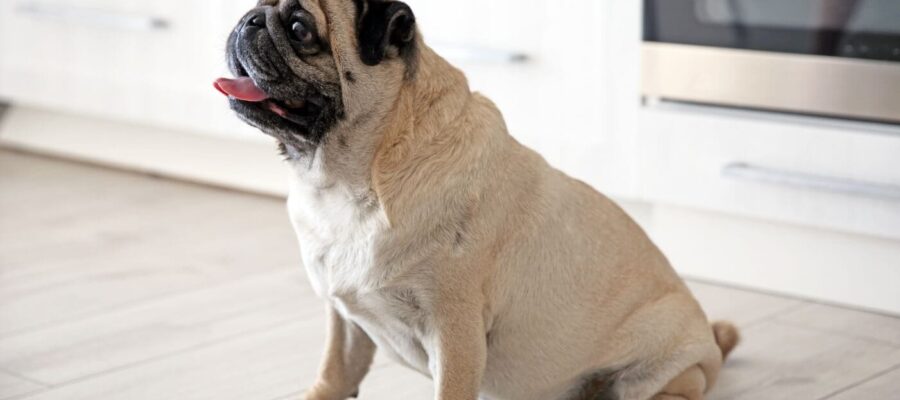
Have you ever noticed how dogs don’t hide their condition? They don’t mask tiredness, hunger, appetite, or pretend to be well. If something bothers them, it is immediately visible: heavy breathing after a short walk, hesitation when climbing the stairs, sad look when the ball remains on the floor. Sometimes it’s not laziness. Enthusiasm is not lacking. It’s simply… too difficult
Many owners end up here without realizing it. A few more snacks, a little too large portions, less exercise during a busy period… and suddenly the dog weighs 2-3 kilos more. It seems a bit much to us. But for him? For a body that’s small, fast, and built for movement… that means a lot.
And many shipowners who find themselves in this situation wonder who is to blame. Well, we could say that none. Or, if we were to find a culprit, it would be… love Food often becomes our emotional language. The piece of cheese “so he won’t be alone”, the leftovers from dinner “because he’s staring”, a reward “just for being good”. We involuntarily accumulate calories. And the dog, kind and polite, never refuses.
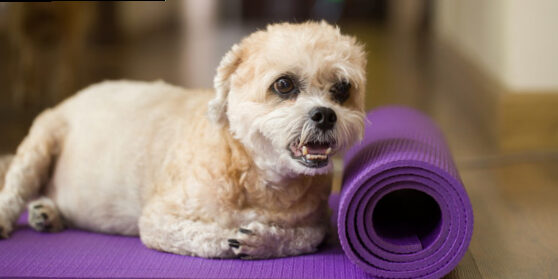
Did you know that there are studies showing that obesity shortens the lifespan of dogs by up to 2 years and increases the risk of joint pain, respiratory problems, diabetes, cardiovascular disease or exercise intolerance?
Luckily losing weight in dogs is possible, safe and effective if done with small, consistent steps and a strategy adapted to each dog.
Of course there are no miracle solutions, but there are realistic solutions such as:
- ⮞ suitable food
- ⮞ portion control
- ⮞ limit caloric snacks
- ⮞ adapted movement
- ⮞ regular monitoring.
How do you know a dog needs to lose weight?
The first step is not to look the dog “in the eyes”, but to objectively observe the shape of the body. Veterinarians use a simple system called Body Condition Score (BCS). You don’t need complicated devices, but two things: palpation and observation.
Let’s start with the ribs. In a dog of the right weight, the ribs are felt immediately under the skin, even if they are covered with a thin film of muscle and fat. If you have to press to find them, it means there is already an extra layer.
Then look at him from above when he is in a relaxed position. The body should taper at the waist. It is a natural “curve”, easily visible. If everything seems straight, rounded, or even bulging outward, the waist is gone. It is a common sign and very easy to spot, especially in short-haired dogs.
Furthermore, if a dog pant after minimal effort, after a short walk, a few steps, or after a few minutes of play, he is not “just tired.” It’s a sign that the body is working harder than it should for mundane tasks.
If two or three of these signs appear we are probably already talking about being overweight and consulting the vet becomes even more important. A specialist can confirm the suspicion, assess the risks and provide you with a clear and safe plan. The point is not to scare you, but to have information. Because usually the moment we notice the first signs is precisely the moment in which we can intervene effectively, with small and delicate measures, before the weight becomes a real burden.
How to help your dog lose weight
The change starts with food portions
When a dog needs to lose weight, the first instinct may be to think about diet. But dogs don’t need strict diets, starvation or aggressive changes. What they need is one simple, correct and consistent step: portion control and the right food. The weight increases little by little and to reverse the process you just need to… always little by little, but in the opposite direction.
The most effective method is to reduce the daily portion of food by 10–20%. It seems small, almost insignificant. But the dog’s body immediately feels the difference. We’re not talking about depriving him of food, we’re talking about giving him exactly what he needs to function well. Furthermore, the portion of food established for each day can be divided into two or three meals. This helps a lot with satiety. The dog will not have the feeling of “eating less”, because the food will still appear at the usual time. The stomach gets used to smaller amounts and the energy remains constant throughout the day.
Snacks: the real enemy of weight
Most of the extra calories come, surprisingly or not, from snacks. They are the little pieces, given “out of love”, which slowly transform into weight. A slice of salami, a corner of bread, a piece of cheese or table scraps seem innocent, but the dog’s body rigorously accounts for it.
Dogs don’t refuse. They live in the present and receive everything given to them with gratitude. And we feel good when we see the wagging tail or the satisfied look. It’s normal to want to spoil them. The problem is not the gesture itself, but the frequency. Two or three times a day, every day, year after year, these little gifts add up.
A simple trick to replace this habit is to use your daily food as a reward. Take 10–20 grams from the food portion, keep them separate and offer them throughout the day as a reward. The dog experiences the same attention and the same moment of joy, but you haven’t added anything new calorically. You just changed the form in which the food comes to him.
Pay attention to the type of food
When your dog needs to lose weight it is not enough to just reduce the amount of food. Sometimes an adapted type of food is also necessary. There are formulas created specifically for overweight dogs, and they are designed with a clear objective: to provide correct nutrition, but with a reduced calorie intake. This type of food has two important advantages: it helps you lose weight at a healthy pace and, at the same time, maintains a sense of satiety.
Of course, choosing the right food is not random. It is very helpful to talk to your vet. Race, age, activity level, but also any health problems influence the decision. An older dog, for example, has different needs than a young, energetic dog. An animal with a predisposition to joint problems or diabetes requires specific formulas. Therefore, the right recommendation reduces risks, optimizes weight loss and ensures a smooth transition. The goal is not just fewer pounds, but a dog that feels healthy, balanced and full of vitality.
Adapted movement, not extreme
When we talk about losing weight, we often think of intense effort. But for an overweight dog, this would be exactly the thing to avoid. The movement must not be tiring, painful or forced. A dog’s body has its own rhythm and the key is to work with it, not against it. The real golden rule is simple: little, but consistent. A few minutes of moderate effort each day is infinitely more beneficial than a grueling hour every now and then.
Walking is the most natural form of movement. Two walks a day, each 20-30 minutes, are a great start. The pace should be active, but not rushed. The dog should move, sniff, explore, but not struggle to keep up. If you see signs of tiredness, stop. Movement should be a pleasure, not an effort.
The games they are another gentle, effective and fun way to stimulate the body. Throwing the ball, for example, is ideal for dogs who love to run. For those motivated by scent, small bounty hunting trails around the house or yard can turn the move into a fun hunt. Olfactory games are excellent: they do not stress the joints, but stimulate the mind and keep the dog active.
Avoid putting excessive strain on the joints
One aspect often overlooked in the discussion of dog weight is joint discomfort. Extra pounds are not only deposited on the belly, but press directly on the legs, hips and spine. That’s why overweight dogs often feel pain when they move: they avoid jumping, hesitate on steps, get up slowly after resting, or stop often during a walk.
To protect his joints, it is important to avoid large jumps. Getting straight into the car or onto the couch may seem trivial, but for a heavy body it’s a pretty hard impact. A simple ramp or a few small steps can make a huge difference to his spine and hips.
Monitor your weight
Losing weight isn’t just a matter of intention. It also means measurement. To know that things are going in the right direction, you need data, even if simple. Regular weighing provides a concrete indicator of progress. Once a week is enough. Not more often, because daily fluctuations are normal and can be confusing or discouraging. A week is a balanced interval: not too long, not too short.
Weighing can be done with a normal scale. Hold the dog, note the value, then weigh yourself and subtract. It’s not the most elegant method, but it works very well, especially for small and medium-sized dogs. For large dogs, a quick visit to the vet’s office is often the simplest solution. They have large, stable scales and the process takes a minute.
What is important? To write. A notebook or app on your phone becomes a record of your progress. The weight should not decrease much. Slow weight loss is healthy weight loss. When the body has time to adapt, the joints feel lighter, the metabolism remains stable and muscle mass is preserved. Falling fast can mean muscle atrophy or metabolic stress, so a slow pace is ideal.
The family environment is important
A dog does not live alone. He has people around him, a home, habits and small gestures that are repeated daily. And often these gestures are made with love. But when trying to help a dog lose weight, love must be arranged. If there are rules in a house, but everyone applies them “in their own way”, the plan breaks down. Kilograms disappear not thanks to the effort of a single person, but thanks to joint effort.
A familiar example: someone decides to reduce portions, but someone else feels compassion when the dog stares at the table. A piece of cheese “out of pity”, a leftover “not to be wasted”, a corner of bread “right now”… and the process goes back. Not because it is evil, but because each family member acts with their own intentions. The result? Caloric chaos.
For things to work, the rules must be clearly defined. What does the dog eat? How much does he eat? Who puts food in his bowl? What is never offered, despite the pleading look? These are simple questions, but their answers must be common. A little list on the fridge can work wonders.
Even though it seems difficult and arduous, changes can be very rewarding. First see how he breathes easier. Then how he moves with more gusto. Then how he likes long walks in the park more and more. And all this does not necessarily mean fewer kilograms, but it means well-being, healthier comfort and better state of health.
Conclusion
Dogs have an extraordinary way of expressing their physical condition; they don’t hide their feelings. Unlike humans, they don’t fake health or mask discomfort with a friendly smile. If a dog is unwell, its body and behavior will almost immediately betray the illness. Shortness of breath after a short walk, hesitation when climbing stairs, or loss of enthusiasm for previously favorite activities can all be subtle signs that a dog is struggling with an illness that its owner may not be aware of.
One of the most common yet often overlooked problems in dogs is weight gain. Weight gain usually occurs gradually and is often difficult to detect. Occasionally eating a few extra treats, being fed a little more food, or reducing exercise during periods of stress can all lead to gradual weight gain. To many owners, an extra two or three kilograms of weight may seem insignificant at first glance. However, for dogs—especially smaller, naturally active breeds—this extra weight can seriously affect their health and mobility.
Being overweight has a variety of effects on dogs. It makes daily activities difficult, reduces stamina during walks or playtime, and increases stress on joints and muscles. Over time, this extra burden can lead to more serious health problems, such as joint issues, excessive strain on the heart, or metabolic disorders. Even minor weight gain initially can gradually impact a dog’s quality of life if left unchecked.
The good news is that with consistent love and attention, dogs can maintain a healthy weight. A balanced diet, appropriate portion sizes, and regular exercise are key to preventing unnecessary weight gain. Daily walks, active play, and mental stimulation help maintain a dog’s physical health and well-being. At the same time, pay attention to treats and feeding habits to ensure your dog receives adequate nutrition without consuming excessive calories.
Regular veterinary checkups also help monitor a dog’s weight and overall health. A veterinarian can provide advice on an ideal weight range, appropriate nutrition, and exercise plans based on the dog’s breed, size, and age. Early lifestyle adjustments can prevent minor weight fluctuations from developing into more serious health problems.
latest posts published
Diabetes in dogs and cats
Car travel with pets: prepare for the journey

7 questions to consider when you want to get a dog
How to protect your pet on hot summer days

Domestic dangers for dogs | Here are the most common household risks for dogs
The best Julius K9 harnesses and leashes for fun summer days
Common diseases of cats. Causes and symptoms

How to take care of your four-legged friend during the holidays
How to help your dog deal with the fear of driving?
