

Did you know that just one week of above-average temperatures is enough to see your pet’s behavior change? Maybe your dog suddenly stops jumping at the door when he hears the sound of the leash, or your cat goes on a sleep marathon. And this is because quadrupeds are among the first to react to high temperatures, and the reactions are sometimes subtle, sometimes through gestures that make you wonder if everything is okay.
Well, these behaviors are not random. Just as we feel tired or become less active on hot days, the same is true for our pets. Except, unlike us, they can’t say I’m too sexy. And there’s nothing I can do to reduce the discomfort. They can’t turn on the air conditioning, they can’t give up their fur, or they can’t change their walking time themselves.
From how they sleep, to how much they eat or how much they want to play, everything changes in one way or another. And if you’re not careful, it’s easy to misunderstand, to think they’re sick, that they’re “not who they used to be,” or that they’re having a tantrum.
Here’s how heat affects your pet’s behavior:
Less energy, more sleep
If you have noticed that your four-legged friend is slower, stops more often or seems to simply want to sleep, it is most likely not a state of apathy, but a natural protection mechanism. Dogs and cats feel the heat a lot and their bodies know it’s time to conserve energy. This is why, on hot days, active behaviors decrease and rest becomes a priority.
Maybe you have a dog who took off the leash on his own and waited impatiently at the door. Now, though, he looks at you, sighs, and lies back down on the cool tile. Or maybe your cat, usually curious and playful, has discovered the darkest corner of the house and won’t leave it anymore. It’s not laziness, it’s simply the way their body deals with the heat.
It is important to respect this slow pace and not insist on long walks or demanding games. Instead of a long walk in broad daylight, it is better to choose two or three short outings in the early morning or in the evening, when the asphalt has cooled down and the air is more breathable. At home, give him a quiet and airy space where he can lie down comfortably.
Changes in appetite
As temperatures rise, many pets’ appetites tend to decrease. Which is, in most cases, absolutely natural behavior. The body no longer requires a high caloric intake, as happens in winter, when the effort to maintain body temperature was greater. In summer the metabolism slows down slightly and the food requirement decreases proportionally.
However, it is important to distinguish between a normal reduction in appetite and a complete lack of interest in food that persists for several days in a row. In this case, a veterinary visit is recommended to rule out other problems.
You can try small tricks to support your appetite and hydration: temporarily switch to wet food or combine dry food with a little warm water to better release the flavors. It is essential not to transform meal times into a source of stress and to understand that a loss of appetite is often just a sign that the body knows how to adapt very well.
Reactions to stimuli
When it is too hot, most of the time the tolerance threshold is lowered, and not only in humans, but also in animals. Some dogs suddenly become more sensitive to noises or the presence of other animals, while cats may react angrily when touched or disturbed from their resting place. It is a normal reaction when the body is already worried about maintaining its thermal comfort because anything more can feel like a threat or a source of discomfort.
These changes may be subtle, such as more frequent barking, a tendency to hide, or even mild restlessness for seemingly “no reason.” Other times, the reactions are more obvious, reactions such as refusal of touch, unexpected growling, or refusal to participate in activities that were once welcomed with enthusiasm.
It is important not to interpret these behaviors as signs of impudence or indulgence, but as indicators of a temporary state of discomfort. At these times, give him space, observe him carefully and avoid further stimuli such as loud noises, sudden movements or forced contact. If the condition persists or worsens, talk to your vet, especially if other signs appear, such as trembling, excessive drooling, or labored breathing.
Behaviors linked to favorite places
One of the most interesting changes during the summer is the choice of place to rest. Suddenly your favorite bed becomes uninteresting and your kitchen tiles seem like the best, most comfortable place in the world. Dogs and cats follow their instincts and choose spaces that provide them with coolness, be it the bathroom tiles, the shaded corner under the bed or a ventilated windowsill.
This behavior is not at all random because animals actively seek out places with lower temperatures to regulate their body temperature. This is why, on hot summer days, it is best to give them access to different areas of the house and not insist sleep in their usual places if you notice them avoiding them.
You can also set up cool corners especially for them with cooling mats, damp mats or gentle flow fans. Observe where your pet instinctively goes and adapt to his preferences. This way you help him maintain an optimal level of comfort and, at the same time, prevent possible problems caused by overheating.
More fragmented or deeper sleep
In summer, pets’ sleep patterns may undergo slight changes. Some dogs or cats sleep more during the day because it is too hot to be active. Others have more fragmented sleep and wake up more often due to high temperature or thermal discomfort.
Instead, once I find a cool, quiet corner, I can sleep soundly without interruptions. This alternation between shallow and deep sleep is natural, as long as the animal seems relaxed the rest of the time.
During the summer, for quadrupeds, rest is a natural mechanism for conserving energy and protecting against heat stress. So don’t be surprised if your furry friend seems “sleepier than ever” because it’s simply his way of taking care of himself.
Reduced interest in play and exercise
Even the most active dogs can sometimes appear unrecognizable on very hot days. The favorite ball remains intact, and walks turn into sniffs and frequent breaks. In cats, feathered toys no longer cause the same excitement and running around the house becomes a rare sport. Animals reject all this because intense physical exertion, even for just a few minutes, can rapidly increase their internal temperature.
However, to maintain their tone, without overly stressing them, short games can be introduced, at home, early in the morning or late in the evening. However, it is important not to force them or insist.
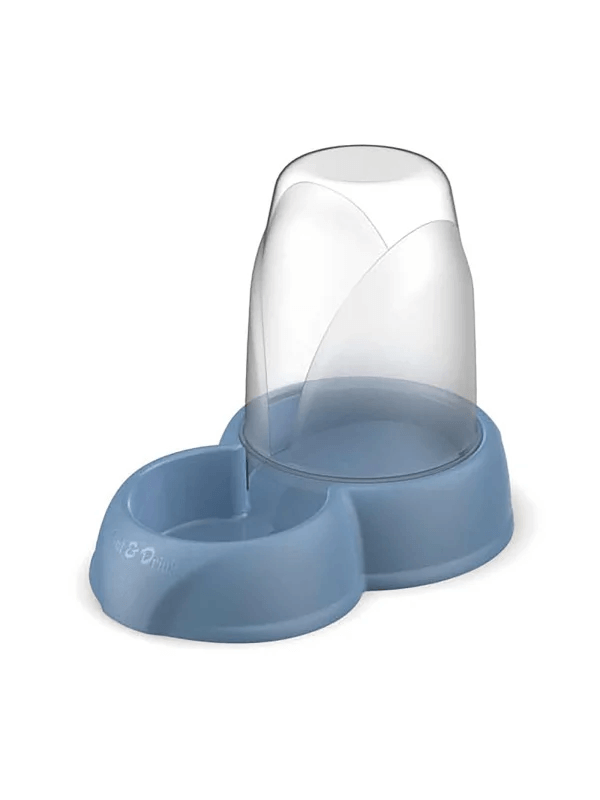
And last but not least, it is important to remember that t High forces not only influence behavior but also physiological needs. Here’s why Hydration is the most important aspect to take care of throughout the summer. If the water bowl is in a warm place, if the water is not cool, or if it is too close to the feeding area, some animals avoid it.
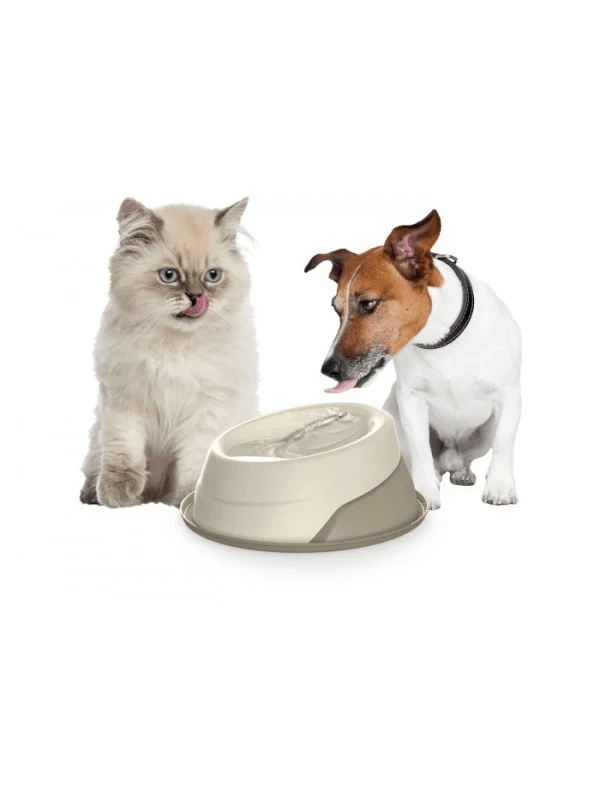
Therefore make sure that your four-legged friend constantly has access to fresh, clean water, preferably in several places in the house. Recirculating water fountains are a great option, especially for cats, who prefer moving water.

Changes in pets’ behavior during the summer are not defects, but natural responses to the environment. Observe them calmly, adapt your routine to them and offer them options to make their hot days easier.
Sources:
latest posts published

Diabetes in dogs and cats
Car travel with pets: prepare for the journey

7 questions to consider when you want to get a dog
How to protect your pet on hot summer days

Domestic dangers for dogs | Here are the most common household risks for dogs
The best Julius K9 harnesses and leashes for fun summer days
Common diseases of cats. Causes and symptoms

How to take care of your four-legged friend during the holidays
How to help your dog deal with the fear of driving?
