
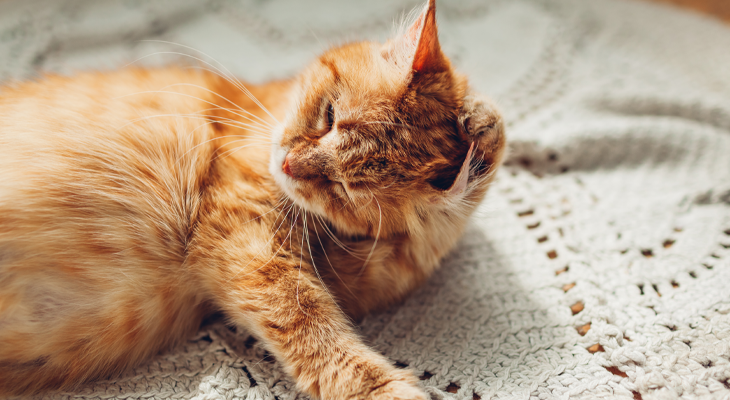
It’s time to play, but your cat keeps scratching. You may notice areas of missing fur or perhaps your cat’s skin is scaly in places. Your cat may seem restless and ill, and you worry that there may be something wrong with his skin.
There are many skin problems that frequently affect our feline friends. Your vet will be able to diagnose your cat’s problem, but it’s good to know what to look for and understand how each skin condition is managed.
RAIA
Scabies is a skin disease caused by several species of small mites, some of which normally live in the hair follicles of the skin. The good news is that, despite popular belief, most types of mange in cats are not very common.
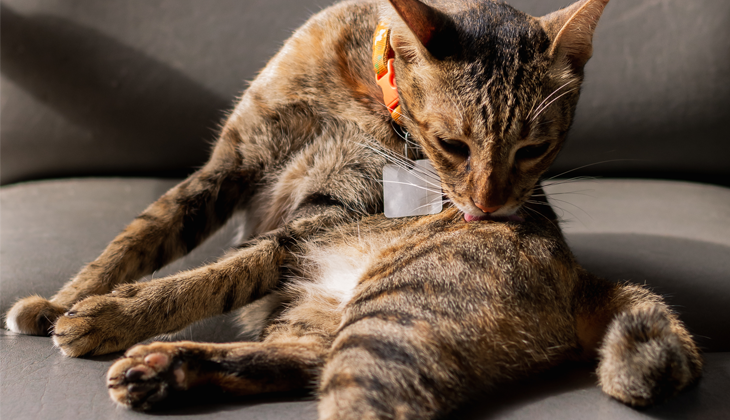
The confusion comes from the fact that many conditions, such as flea infestations, show the same signs as scabies. These may include itching, hair loss, dry and/or red skin, excessive licking and grooming, and restlessness or irritability.
There are five types of mites that can affect cats:
- Ear mites (Otodectes cynotis) – Otodectic mange is quite common in cats, although most people refer to this condition as “ear mites” rather than mange. These mites, as the name suggests, infest cats’ ears and cause itching, irritation and inflammation. If your cat appears to have head lesions, his ears are dirty, itchy, and he scratches or shakes his head a lot, he may have ear mites.
- “Walking dandruff” (Cheyletiella spp.) – Cheiletiellosis is caused by mites that live on the surface and in the superficial layers of the skin. Infestations can be asymptomatic or lead to scaling, itching and scabbing on the back, and very few mites are needed to cause signs. This mite is more common in rabbits than in cats.
- Demodectic mange (mites Demodex cati) – Demodex cati it is not contagious and normally lives on the skin of cats. This mite only causes problems in cats with immune system problems or systemic diseases, when the number of mites increases and skin lesions appear. It is sometimes found in young kittens and older cats.
- Sarcoptic mange (mites Sarcoptes scabiei) – This is a less common cause of scabies. It is highly contagious and can be contracted by cats through contact with wild animals or other infested animals (such as dogs) and can also be transmitted to humans.
- Notohedral mites (mites Notoedres cati) – Also known as “feline scabies”, this type of scabies is very rare but highly contagious to cats and humans.
HOW IS ANGER TREATED?
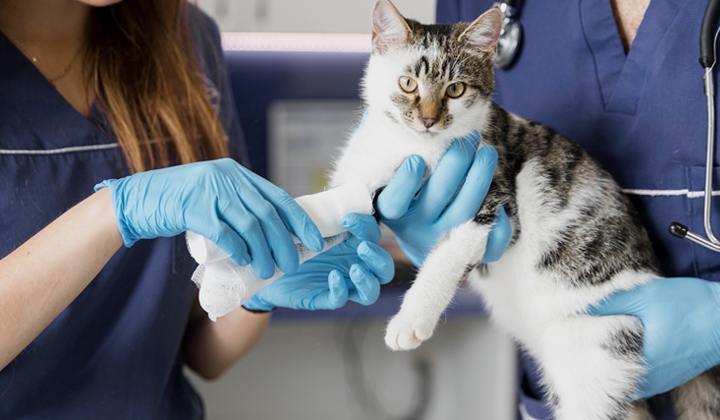
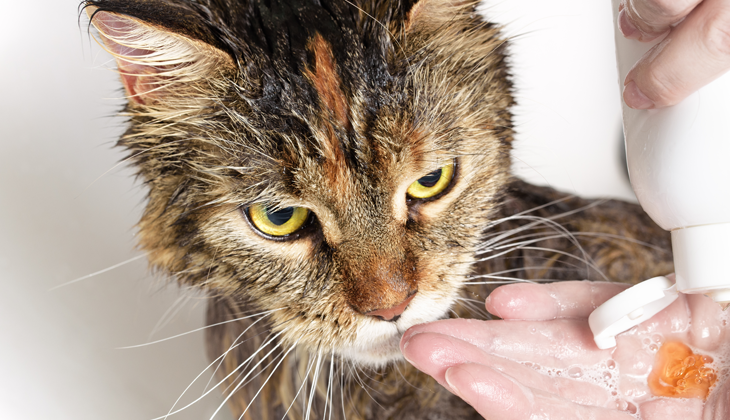
The treatment regimen will be different depending on the type of mite your cat has. Your vet will prescribe medications that will kill the mites. You may need to apply this treatment topically, in the ear, or via injection, shampoo, or bath.
You may need to isolate your cat indoors to avoid spreading it to people or other pets. In severe infestations, additional treatment such as antibacterial shampoo or antibiotics may be necessary. Although mites clear up quickly, secondary skin infections can take up to a month to heal.
Because scabies is complex and most types are uncommon, it is imperative that your veterinarian diagnoses it before starting any scabies treatment program. The diagnosis is established by observing the mites in a skin sample or footprint under a microscope.
Your vet will be able to determine whether your cat has fleas or mites and which types. Insecticides, collars and bathing solutions containing permethrin or amitraz indicated for dogs are toxic to cats.
HOW CAN I PREVENT RABIES IN MY CAT?
Most healthy domestic cats have a low risk of developing mange. Similar to flea control, maintaining a clean environment by washing the cat’s litter box and vacuuming the house regularly are simple measures that go a long way toward preventing scabies.
THE FLEAS
There are over 2,200 recognized species of fleas worldwide and they are a major cause of itching in cats. For more information on fleas, check out our articles:
Everything you need to know about cat vaccines
Vector-borne diseases – Part II
Heartworm disease in cats: fact, not fiction
FLEA ALLERGIC DERMATITIS
This condition is the result of an allergic reaction to a flea’s saliva when it bites. Bumps and scabs can appear on your cat’s back, neck, or face and can be quite serious, especially if aggravated by excessive licking, scratching, and biting. Cats with flea allergy dermatitis (FAD) may experience hair loss, open sores or scabs on the skin, and develop bacterial infections.
WHAT IS THE TREATMENT FOR FLEA ALLERGIC DERMATITIS?
As with flea infestation, the best treatment is treatment to eliminate and control fleas. There are several effective flea treatment and control products available for your cat and your home.
DERMATOPHYTES
Ringworm (dermatophytosis) generates a condition of the superficial layer of the skin, caused by fungi called dermatophytes. Although it is called that, this infestation is not caused by a worm and the skin lesions are not always circular. In cats, the infestation affects the skin, fur and/or claws. Dermatophytes can also affect other animals.
HOW CAN I KNOW IF MY CAT HAS DERMATOPHYTOSIS?
Recognizing dermatophytosis in your cat can be very difficult. Some cats may have dermatophytosis without any clinical signs. You may notice something that looks like ash in your cat’s fur, or thickened areas of hairless, crusted, ragged, or even generalized skin.
Infested nails become rough, bumpy, or even deformed, with a scaly base. Any infested cat, whether it shows signs or not, can still infest people or other animals.
HOW DOES DERMATOPHYTOSIS SPREAD?
Dermatophytosis is transmitted through direct contact with an infested animal or person, contaminated objects or surfaces.
Contact with dermatophytes does not always cause infestations. Healthy animals and humans are generally resistant to infestations. Elderly people and children are particularly vulnerable, as are people with compromised immune systems or skin problems. Contact your GP immediately if you or anyone in your family develops suspicious skin lesions.
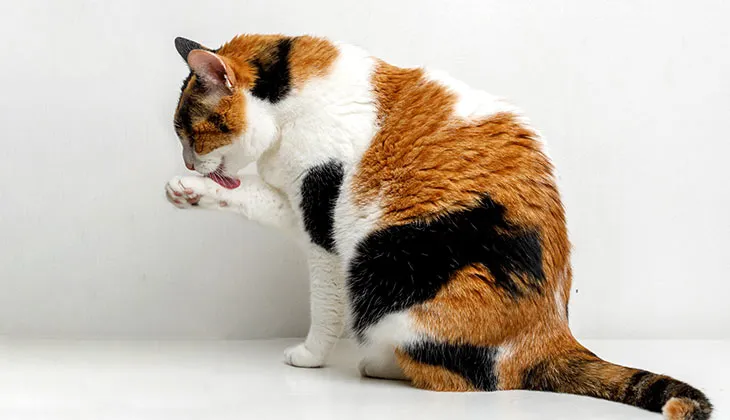
HOW IS MY CAT’S DERMATOPYTOSIS TREATED?
Your veterinarian may prescribe topical treatments (ointments, creams, or shampoos) and/or oral antifungal treatments for your cat. It is recommended that you clean your home thoroughly and minimize exposure to other people and pets.
FELINE ATOPY
Atopy, also known as atopic dermatitis, occurs when you experience an allergic response to substances in the air, such as pollen or house dust. If itchy, your cat may start scratching, licking, biting, or scratching frequently.
HOW IS FELINE ATOPY TREATED?
To make a diagnosis of atopy, your vet will rule out other more common skin problems that have similar symptoms, including fleas, ringworm, mites, and lice.
Management of atopy will differ depending on the severity of the cat. Your vet may prescribe skin supplements or medications to help reduce your cat’s itching. If the diagnosis is confirmed, it may be possible to avoid some allergens.
YOUR CAT’S ITCH
Regardless of the cause, no one wants to see their beloved feline friend uncomfortable. If you suspect your cat has a skin problem, the best thing you can do is talk to your vet.
Are you looking for a vet?
The veterinarian has a very important role in the animal’s health. Enter your location information and get a list of vets near you.
FIND A VETERINARY DOCTOR
latest posts published

Diabetes in dogs and cats

Car travel with pets: prepare for the journey

7 questions to consider when you want to get a dog

How to protect your pet on hot summer days

Domestic dangers for dogs | Here are the most common household risks for dogs

The best Julius K9 harnesses and leashes for fun summer days
Common diseases of cats. Causes and symptoms

How to take care of your four-legged friend during the holidays

How to help your dog deal with the fear of driving?
