
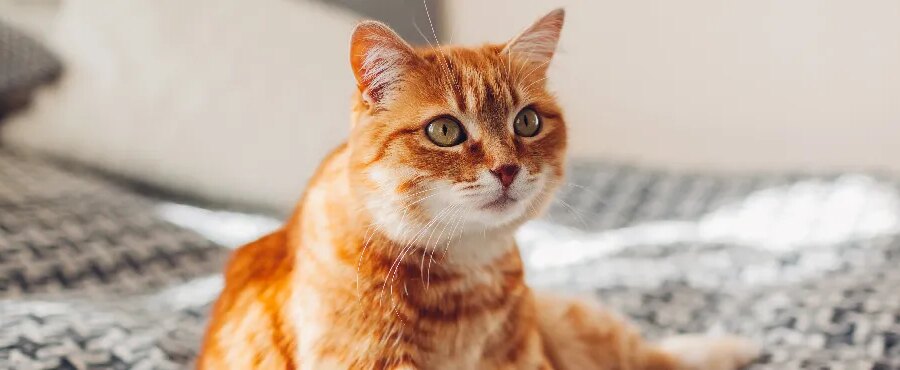
The ancient Egyptians believed that cats were gods. In the Middle Ages, in Europe, cats were condemned, being considered companions of witches. However, they have always been seen as mysterious and unapproachable, and this reputation persists to this day.
Cats became domesticated only a few thousand years ago, compared to dogs, which were domesticated 30,000 years ago. Unlike dogs, cats are not made for social groups, their ancestors trace their roots to the African wild cat, one of the large solitary animals of the animal world.
Despite the mystery surrounding cats and their seemingly “reclusive” behavior, it has long been recognized that domestic cats have deep feelings for their owners and develop strong bonds. While a cat’s need for social contact with humans may vary, deciphering cat behavior can help us understand and appreciate our feline friends even more.
DECIPHER THE CAT CODE
There are many behaviors exhibited by our felines that we try to interpret. As their fellow humans, we make many assumptions and yet only vaguely understand what they are trying to tell us.
Your cat greets you at the end of the day with its tail raised. He can slide between your legs and you can even feel his torso. You interpret all this to mean that the cat is happy to see you. But is this really the message?
A raised tail, for example, is most likely not an expression of joy, but rather a signal of availability for contact. Imagine the wild cat in the tall grass of the jungle. It can calmly draw attention to itself by raising its tail. It’s a way of saying, “I’m ready to talk.”
Sliding between your legs may seem like affection on the cat’s part, but it is not a general act of love. In most cases, your cat is trying to get your attention, most likely for food, or to mark you as its territory.
Most of the time we take for granted that when the cat purrs he is happy, or at least tells us that he loves us.
Research into cat behavior has begun to show that there are many other reasons why cats purr, from being a self-soothing mechanism in uncomfortable situations to being a persuasive tool when they want something.
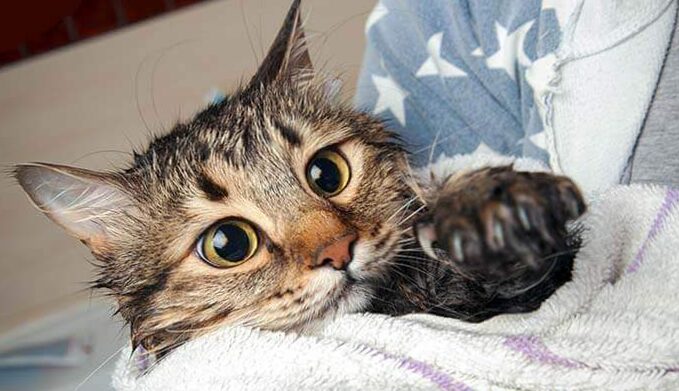
Your cat’s clearest expression of love is “kneading” with his paws.
This behavior is reminiscent of his first days of life as a kitten. “Kneading” with their paws is an act that kittens instinctively do to stimulate the flow of milk when they feed on their mother.
SOCIAL HIERARCHIES
There is a hierarchical structure in the cat world, and humans have very little to do with it. For example, female cats are more likely to form a community than male cats.
Wild females often form groups and in these groups, a cat who has given birth and has kittens will rise in rank. Spayed females, by contrast, are often at the bottom of the hierarchy.
And unlike male cats, groups of female cats show clear group solidarity.
Male cats find their place in the hierarchy thanks to a set of unwritten rules. This applies regardless of whether the cats are stray or domesticated.
Male cats can be very brutal in establishing and maintaining rank, although neutering generally provides calm among the males of a group.
Among male cats living together in the same house, rank is often evident through small gestures: who eats first, who sleeps where, and so on.
THE HUMAN-CAT CONNECTION
For dogs, the owners occupy the “alpha” position, they are the leaders of the group. This doesn’t apply to cats either. Nowadays, domestic cats seem to accept adapting to our environment in exchange for some company (when they want it!), regular meals, a good place to sleep and a warm, sunny place to nap.
While the human-cat bond doesn’t appear to follow any exact science, researchers have shown that there are significant benefits for cat owners from coexisting with felines, both physically and mentally.
Studies have shown that cat owners feel happier, more confident and less anxious than non-cat owners. They are also said to sleep, concentrate and deal with problems in their lives better.
Experts have also said that cats help release stress, help us be more sensitive and caring, and can even be beneficial to our physical health.
Conclusion
Throughout history, cats have occupied a unique and sometimes contradictory position in human society. In ancient civilizations such as ancient Egypt, cats were highly revered, even considered sacred animals. Their elegance, hunting skills, and mysterious aura were admired. Killing a cat was considered a serious crime, and many cats were even mummified along with their owners as a sign of respect and loyalty. This deep reverence reflected the belief that cats possessed special and awe-inspiring qualities.
However, the perception of cats changed dramatically in medieval Europe. At that time, cats were often associated with superstition and fear, frequently linked to witchcraft and black magic. This negative image led to widespread persecution of cats, which were sometimes seen as companions of witches or harbingers of misfortune. Despite these prejudices, cats continued to live alongside humans, silently fulfilling their roles as skilled hunters and companions.
One reason cats are often perceived as mysterious and independent lies in their evolutionary history. Unlike dogs, which were domesticated approximately 30,000 years ago and gradually evolved into social animals, cats were domesticated much later—only a few thousand years ago. Their ancestors, the African wildcat, were solitary animals, living and hunting alone. Therefore, modern domestic cats still exhibit many behaviors associated with independence and autonomy.
This evolutionary history explains why cats interact with humans differently than dogs. Dogs typically rely heavily on social structures and constant interaction, while cats tend to maintain a balance between independence and intimacy. They can form strong bonds with their owners but also value personal space and autonomy. This combination of independence and companionship contributes to their enigmatic image.
Despite this enigmatic nature, cats remain popular companions in homes worldwide. Their active nature, elegant demeanor, and occasional displays of affection create a unique bond with their human companions. For many, living with a cat means sharing a home with a creature that is both independent and capable of deep emotional connection.
Ultimately, the long and rich history of cats reflects the complexity of their character. From revered animals to often misunderstood companions, cats have always captivated and fascinated people. Even today, they continue to attract us with their independence, intelligence, and understated affection, proving that their mysterious nature makes them such extraordinary companions.
latest posts published

Diabetes in dogs and cats

Car travel with pets: prepare for the journey

7 questions to consider when you want to get a dog

How to protect your pet on hot summer days

Domestic dangers for dogs | Here are the most common household risks for dogs

The best Julius K9 harnesses and leashes for fun summer days

Common diseases of cats. Causes and symptoms

How to take care of your four-legged friend during the holidays

How to help your dog deal with the fear of driving?
