
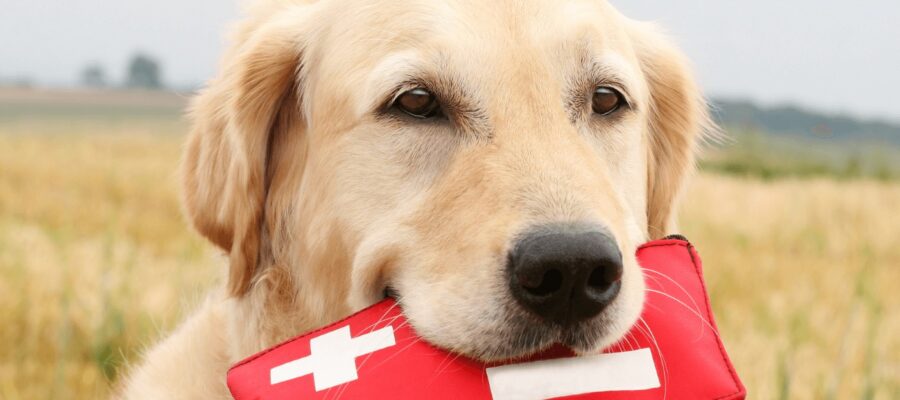
Have you ever thought about what you would do if your pet had a small injury while you were out for a walk or maybe even at home? Small accidents can happen at any moment and in those moments it is important to have everything you need at hand to help your four-legged friend. It’s true that no pet owner is fully prepared for everything that can happen on a typical day. Most of the time, we all think that nothing can happen. However, a shard hidden in the grass or even on the kitchen tiles, an insect bite, a scratch caused while playing or an eye irritation can cause discomfort or even complications if not treated in time. That’s why a first aid kit can be of great help in such situations.
What should a pet first aid kit contain?
The first aid kit does not have to be complex but it must be well thought out and obviously contain products that are safe for the quadruped and products that help manage the wounds until the vet intervenes when necessary. Here are some of the most important things that should not be missing in a first aid kit:
Scissors with rounded tip
This is essential in times when you need to cut a bandage, bandage or even fur around a wound. The rounded tip avoids injury to the animal when operating in sensitive areas. It is ideal for situations where you want to clean an area without causing additional discomfort.
Tweezers
A quality pair of tweezers helps you carefully remove ticks, thorns, splinters, or any small objects stuck in your pet’s skin. It is important that it is easy to handle and that it has a thin tip to be able to grasp foreign bodies well without damaging the surrounding tissues.
Digital thermometer
Since cats and dogs can’t tell if they have a fever, it’s your job to check their body temperature when you see that they’re not feeling well. A digital pet thermometer is essential for spotting any changes.
Including sterile
Compresses are the basis of any dressing. They protect the wound and prevent contamination of the affected area. You can use them to cover wounds or apply cleaning solutions in a gentle and hygienic way.
Self-adhesive elastic bandage
This bandage is easy to apply, does not slip and does not require additional plaster for fixing. It is ideal for holding the compress in place or supporting a minor sprain. Just make sure you don’t tighten it too much as this will cut off circulation.
Hypoallergenic leucoplast
Used to secure dressings, hypoallergenic leucoplast does not irritate the skin and is easy to remove. It is a safe solution for pets with sensitive skin and can also be used to secure compresses in more difficult areas.
Disposable gloves
When treating a wound or infection, it is important to maintain hygiene. Disposable gloves protect you and your pet by preventing the transfer of bacteria.
Disinfectant solution dedicated to pets
Not all human products are suitable for pets. A gentle solution, specially formulated for veterinary use (for example with chlorhexidine) is essential for cleaning small wounds, scratches or bites.
Syringe without needle
A needleless syringe is essential because you can use it to wash a wound, administer water, or administer an oral liquid medication.
Magnifying glass
While it may seem insignificant, the truth is that a magnifying glass can help you see if your furry friend has a small tick, bite or hidden irritation.
Clipper
In the event of a wound it is important to clean the surrounding fur to properly disinfect and apply a dressing. A safety-end trimmer prevents accidental cuts and provides visibility to the affected area.
Eye hygiene disks
Pets’ eyes can become irritated due to dust, wind or fur impurities, especially in breeds with large eyes or facial folds. The eye hygiene pads are made of soft materials, do not contain alcohol and are soaked in gentle solutions, safe for daily use. They are ideal for gently cleaning the corners of the eyes, removing secretions or preventing the formation of tear stains. They are practical, quick and contribute to complete and delicate care of the sensitive area around the eyes.
Since it is better to be prepared than unprepared, make sure you always have a first aid kit on hand which can often help you save your four-legged friend. Sure, you may never use it and keep it in the closet for years, but when you really need it you know for sure that you can rely on it.
Sources:
latest posts published

Diabetes in dogs and cats

Car travel with pets: prepare for the journey

7 questions to consider when you want to get a dog
How to protect your pet on hot summer days

Domestic dangers for dogs | Here are the most common household risks for dogs
The best Julius K9 harnesses and leashes for fun summer days
Common diseases of cats. Causes and symptoms

How to take care of your four-legged friend during the holidays
How to help your dog deal with the fear of driving?
